luxury hair, make up, beauty and wellness BOOKING PLATFORM
Redesigning Beautii's booking experience to increase conversions by 70%.



Overview
Beautii is a London based booking platform, offering luxury at-home beauty treatments connecting users with top celebrity make-up artists, hairdressers and beauty experts to provide services such as massages, facials, spray tans and more, at your home, office or hotel.
The business was experiencing lower-than-expected booking completion rates, despite strong interest in services.
My role focused on identifying friction points through research, redesigning the booking experience, and improving usability across the customer journey. I worked with the founder, in-house team members, and a team of web developers across the UK and India.
The redesign contributed to:
70% increase in booking volume
75% improvement in team efficiency
80% of bookings successfully managed through WhatsApp workflows
Identifying Usability Issues Affecting Conversion
👉 Users were being asked to sign up too early in the booking journey, before they had enough trust or clarity to proceed.
This created a mismatch between:
User expectations → browse first, decide later
Business flow → sign up early, then explore
Result: High drop-off before booking completion
At the start, the issue appeared to be multiple usability problems across the flow.
What research revealed…
It wasn’t just “many small issues” — it was one core issue:
👉 Users lacked confidence early in the journey
Early login prompts, limited visibility of services prior to account registration, lengthy appointment request forms, unclear error messaging and missing trust signals (e.g. reviews, limited information on beauticians) were all causing drop-offs and reinforced that.
Goals
Improve browsing experience before sign-up.
Build trust through transparent information (reviews, provider profiles).
Reduce booking friction.
Increase completed bookings.
To better understand Beautii’s position within the at-home beauty and wellness market, I conducted a competitive analysis of three of their biggest competitors — Urban, Secret Spa, and Ruuby. The goal was to identify the key differences in their user experience, service transparency and trust-building strategies. By comparing these platforms against Beautii, I aimed to uncover opportunities to enhance Beautii’s digital experience, particularly around how users discover services, evaluate therapists and book treatments with confidence.


Key Insights
👉 Insight:
Users are allowed to browse freely before committing.
👉 Decision:
Removing early barriers could increase engagement and trust.
Survey
A survey of 35 women aged 30–60 was conducted to evaluate the usability of Beautii.co using quantitative and qualitative questions. 56% of participants said they booked beauty services online at least once a month and were asked to explore the site, assessing:
98%
Wanted to see who would be performing the treatments.





94%
Reported challenges with website navigation.
94%
Expected to book treatments without contacting anyone.
80%
Wanted more visible customer reviews.
75%
Found pricing unclear or hard to locate.
62%
Felt the treatment descriptions lacked enough detail.
Key Insights
👉 Insight:
Users are allowed to browse freely before committing.
👉 Decision:
Removing early barriers could increase engagement and trust.
Usability Testing
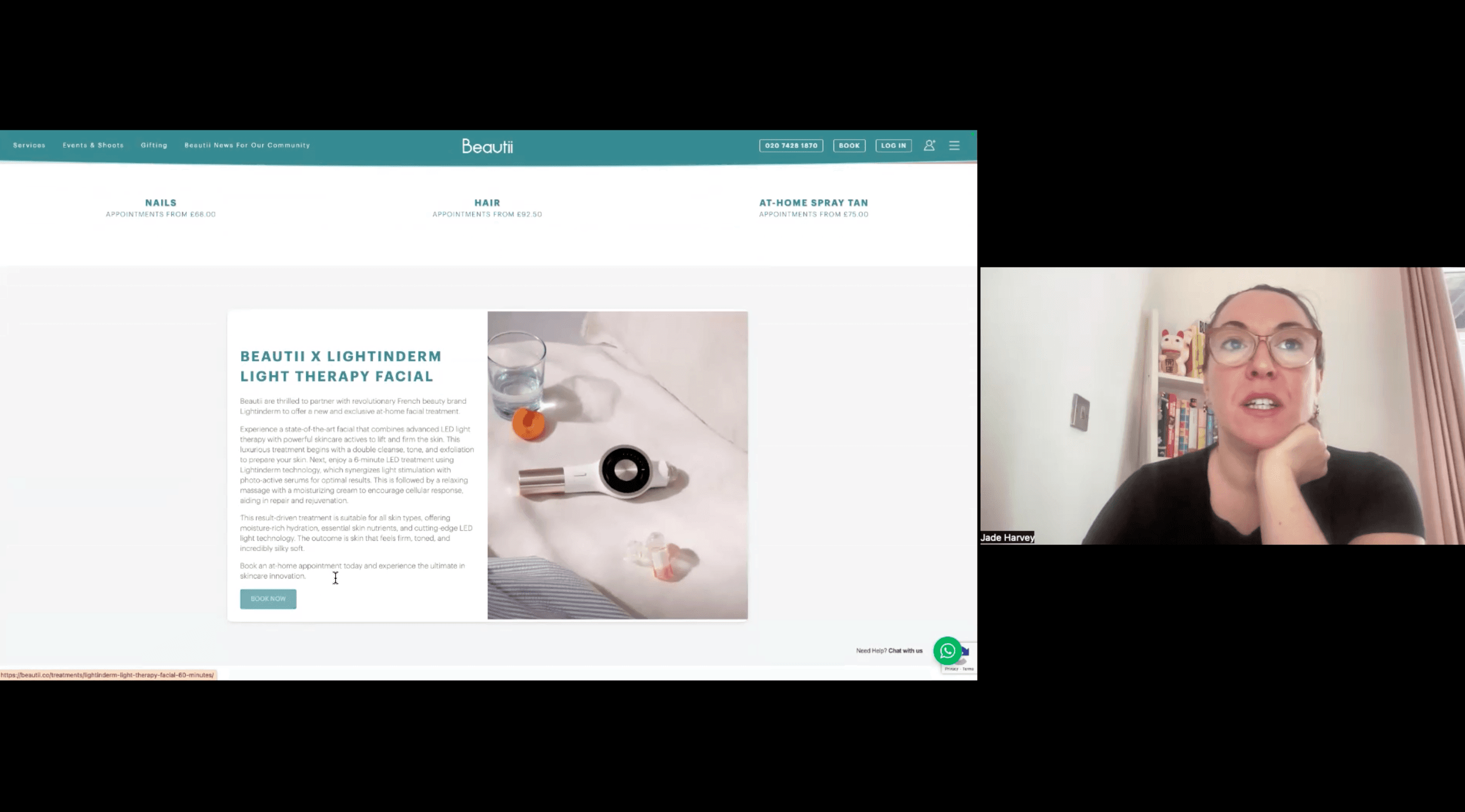
To validate Beautii’s current booking flow and uncover real pain points, I conducted usability testing with three women from different age groups and backgrounds within Beautii’s target demographic who all book beauty services regularly, two using desktop devices and one via mobile. Each participant was asked to imagine they were booking an at-home treatment through Beautii, for example a massage, while also exploring what other services the site offered.
The task was designed to replicate a realistic first-time booking experience: navigating from the homepage, browsing services, selecting a treatment, and moving through the booking steps up to just before confirming the appointment.
By observing how participants interacted with the site, I was able to capture their first impressions, moments of friction, and overall satisfaction. This process provided detailed insights into how real customers interpret Beautii’s interface.


Key Insights
Observed issues:
Forced login interrupts flow
Users explore services they later cannot book
Error messages increase confusion
👉 Insight:
Users lose momentum at moments of uncertainty
👉 Decision:
Reduce friction before asking for commitment
Visual representation of the booking process highlighted pain points such as the repeated login steps, confusing navigation and user expectations not being met. This ensured we had the necessary insights to create a seamless and effective journey for Beautii’s ideal customer. The user persona below was developed from the target demographic information provided by Beautii and real world user data collected from my research.

This diagram outlined all steps in the booking process to reveal friction points. Several areas where there was room for improvement in the website’s overall flow were identified.
The login process: customers are forced to login or create an account before browsing.
Enabling a location based search at the start of the process.
Preventing the need to reselect treatments from a second treatment menu after logging in or creating an account.
These changes would help users reach their end goal of booking a treatment more quickly and smoothly. The yellow boxes represent an 'Action' and the orange boxes are 'Decisions'.

I then created an updated user flowchart. It highlights how removing a few key obstacles can make the user journey faster and more effective. Specifically I removed the prompt for users to log in or create an account before browsing services and also ensuring users don't have to reselect a treatment after logging in or creating an account. Instead, users would only be asked to log in or create an account at the final step before completing their booking and without needing to reselect their treatment. The updated flow now provides a seamless booking experience, reducing friction for users.

Instead of focusing on every step, I zoomed in on key drop-off moments, where:
Users were blocked.
Confidence decreased.
The flow showed a critical issue:
👉 “Book” did not behave like users expected
Users expected:
→ View services.
But got:
→ Forced account creation.
Instead of a list of issues, these all ladder up to one theme:
👉 Users are pushed to commit before they feel ready
Early login requirement.
No postcode validation upfront.
No visibility of availability.
Lack of reviews and provider context.
Confusing error messages.
No service filtering.
No booking continuity (basket).
Low-High Fidelity Wireframes
I created wireframes in Figma to explore structure, layout, and user flow before focusing on visual design. Since Beautii does not currently have a mobile app, the brief centered on optimising the desktop experience. I streamlined the booking journey from multiple fragmented steps into four clear, sequential screens.

Screen 1

Screen 2

Screen 3

Screen 4
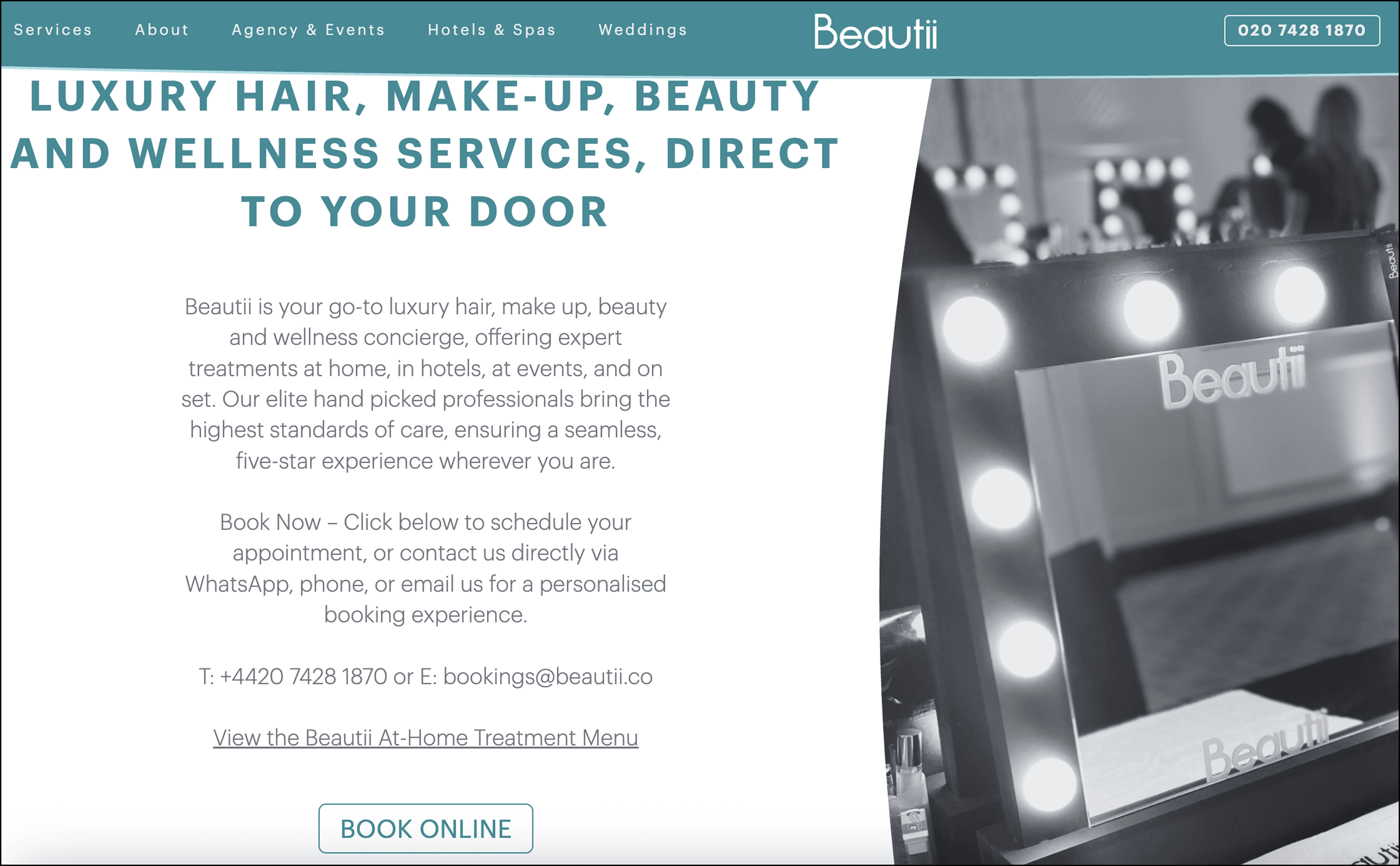

On the current homepage, many users clicked the ‘Book Online’ CTA and completed several steps—creating an account, searching, and selecting a treatment—only to discover it wasn’t available in their area.
A key design decision was adding a location checker at the start of the booking flow on the homepage, so users can instantly see nearby availability, reducing friction and drop-off.
This wireframe also introduces a “Select Service” dropdown alongside the location field, allowing users to explore treatments upfront without signing up or navigating multiple pages.
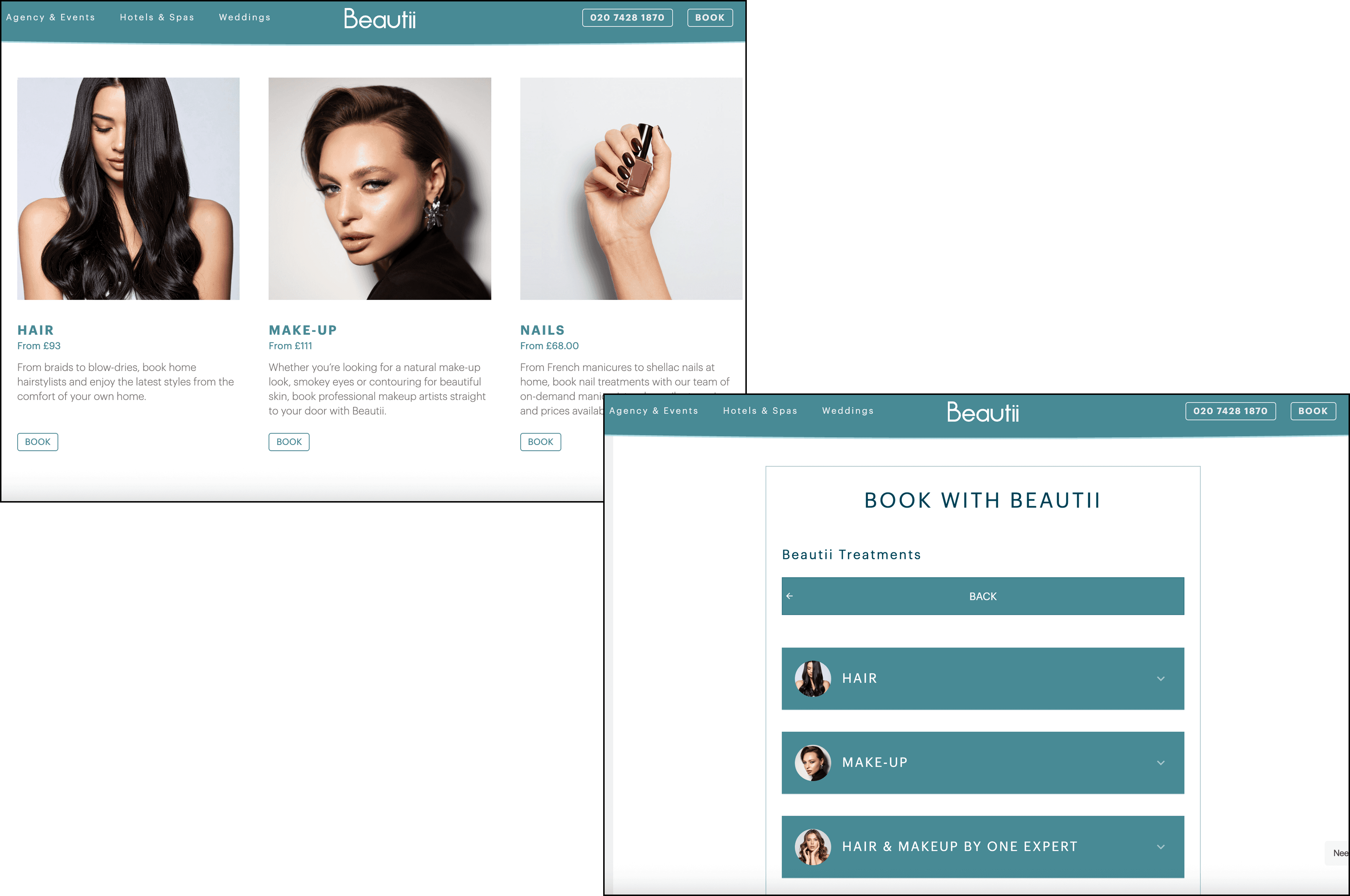
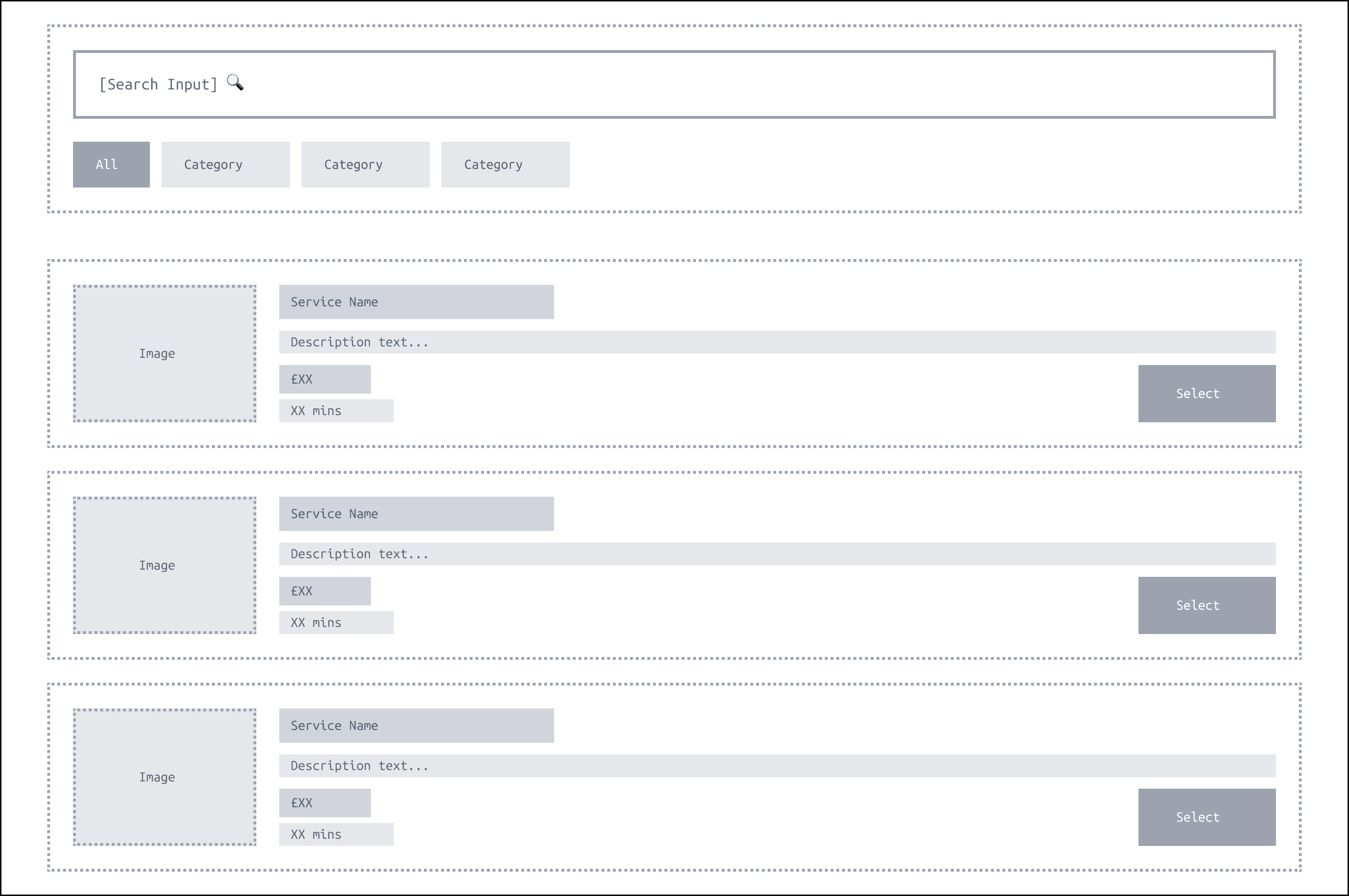
In the original Beautii booking flow, users were required to select a treatment, then log in or create an account, only to be redirected to a second treatment menu where they had to make the same selection again. This process added unnecessary friction and caused several users to drop off before completing a booking.
To address this I redesigned the service selection experience so users could view and choose treatments immediately after checking location availability — without needing to sign up first. By removing the account barrier and duplicate selection step, the new flow felt faster and more aligned with user expectations for an on-demand service. This would also eliminate the slow loading screens, which some users in usability tests said made them feel uncertain about the website’s safety and the security of their data.


The original flow spread the users choices across multiple screens, especially when selecting therapist, date and time.
The new flow groups related decisions together: date, therapist, and time. I consolidated these steps to reduce unnecessary screen transitions.
I also enabled easy comparison of therapist availability and ratings in one place. The addition of visible reviews and star ratings provide reassurance and help users make confident decisions without leaving the page.
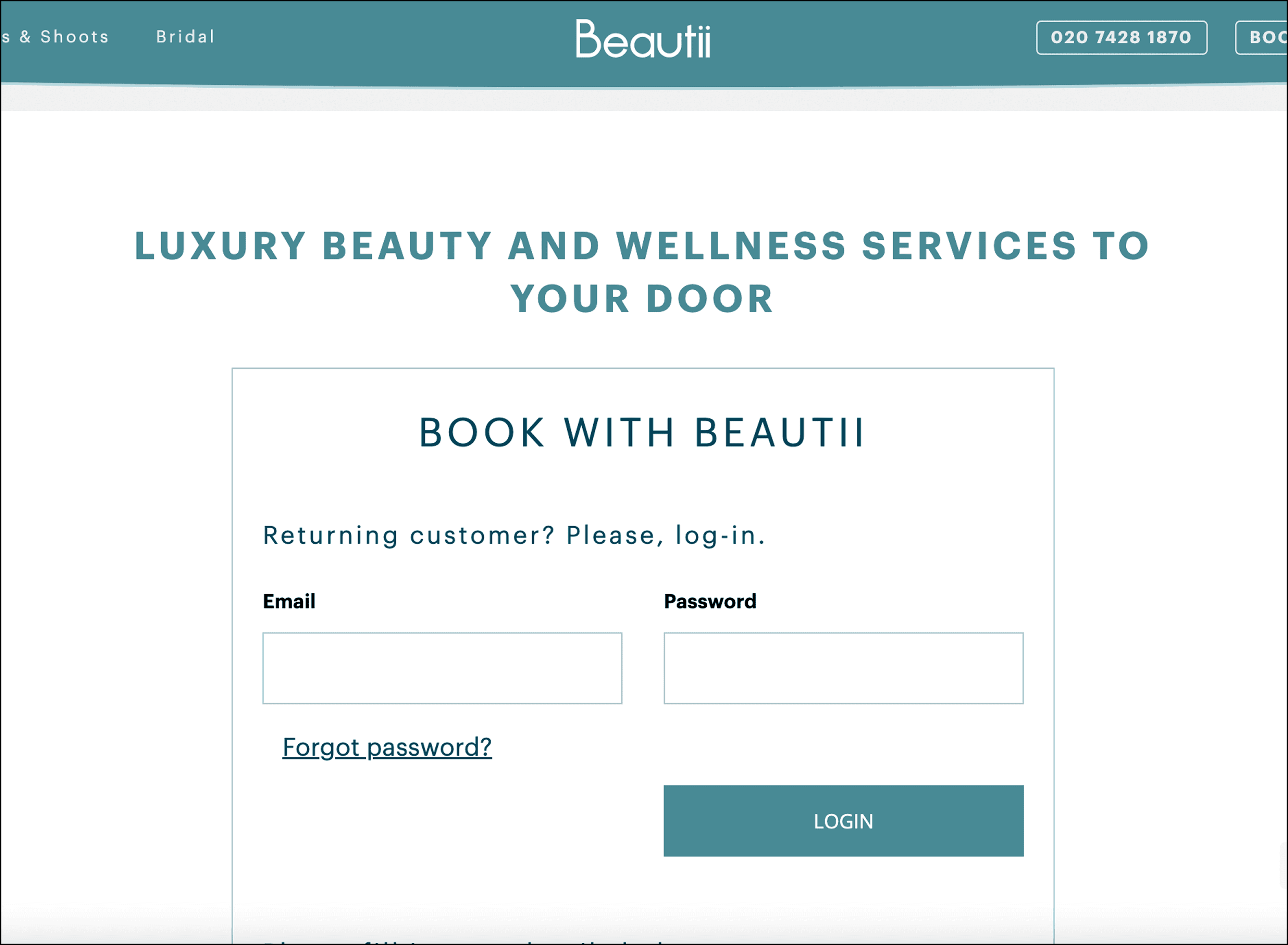

On the current homepage, users were prompted to create an account or log-in before they had a clear understanding of the services available, leading to early drop-off. Additionally, when users clicked into services, they encountered this screen before being able to view any available treatments.
I moved account creation to the end of the booking flow, letting users browse availability first without signing up. This reduces friction and commitment anxiety, helping prevent early drop-off.
I also added a guest checkout option so users can complete bookings without creating an account. This supports faster, more flexible journeys while still allowing users to sign up later once trust is established.
After validating the structure and flow through low- to mid-fidelity wireframes, I progressed to creating high-fidelity wireframes for each step of the booking journey. Working at a high-fidelity level also allowed me to refine spacing, typography and visual emphasis, and to ensure the designs aligned with Beautii’s brand and aesthetic. Creating high-fidelity wireframes for every step of the journey made it easier to identify any remaining friction, test assumptions, and clearly communicate the final experience to the founder and web developers.
High Fidelity Prototype
To explore high-fidelity interactions, I created an interactive Figma prototype with simplified navigation and a streamlined booking flow. This prototype included all my key proposed improvements, such as a persistent shopping cart, an upfront postcode availability check, fewer steps and screens, a single unified menu, more detailed therapist information, and the option to browse without creating an account. This interactive prototype was tested internally to demonstrate the improved booking flow.
With the final prototype in place, I conducted a second round of usability testing to validate whether the design changes addressed the issues identified earlier.
I tested the updated prototype with the same three participants from the initial usability testing session, allowing me to directly compare their experiences before and after iteration. This helped confirm whether the refinements improved clarity, confidence, and ease of booking.
The second round of testing showed a clear improvement in how users understood and moved through the flow.
Participant 1
“The filters help a lot compared to scrolling before. I wouldn’t have booked on the earlier version.”
Participant 2
“This feels more polished and easier to use. I prefer this layout as it feels less overwhelming.”
Participant 3
“I didn’t have to think much. I immediately know what my options are and it is way easier to compare different therapists.”
Impact & Outcomes
While the prototype demonstrated clear usability improvements, Beautii faced budget and development constraints that made a full website rebuild unrealistic at the time. Instead, I worked with the team to identify smaller, high-impact changes that could be implemented quickly and still improve user trust, clarity, and overall experience.
One of the core problems with Beautii business model was that the people at Beautii did not have access to the therapists availability so behind the scenes were having to call to check availability before confirming appointments with users. To avoid this problem I then worked with the web developers in India to introduce the platform: SimplyBook.me and integrate it into the current website to provide the foundation for real-time availability and automation:
Key Capabilities:
Two-way Google Calendar sync for all therapists.
Service area configuration for location-based matching.
Automated confirmations and receipt.
This then meant that as more therapists shared their calendars via SimplyBook.me with Beautii, that users were able to do more instant bookings without having to request a date/time.

One of the other main changes implemented was removing the contact request form that appeared when users couldn’t find an available appointment and streamlining the booking flow. Previously this form required users to re-enter all their details, the treatment type and preferred date and time. Even though they had already provided this earlier in the booking flow. This created unnecessary friction and frustration.
To improve the experience, we replaced the form with an instant WhatsApp chat feature, allowing users to connect directly with Beautii’s concierge team in real time. This change eliminated redundant data entry, reduced response wait times, and made the experience feel more personal and immediate — aligning with Beautii’s luxury, high-touch brand positioning.


Error messages were originally vague (e.g. simply stating "error" without explanation). We improved the messaging experience by clearly explaining that the lack of availability doesn’t reflect the full schedule, reassuring users that they can still book manually. It also provides clear next steps, offering options to contact Beautii, which helps users continue their booking journey with confidence rather than abandoning it. This more transparent and supportive tone transforms a moment of friction into an opportunity for trust and engagement.


Results
Beautii was processing approximately 20 bookings daily through a manual system that resulted in 80% of bookings requiring manual processing due to users not being able to instant book and over 8 hours of administrative work. By streamlining more operations via Whatsapp, the transformation of Beautii’s booking system delivered a dramatic improvement in efficiency, customer experience, and financial performance. Within the first three months of making the outlined changes, the results exceeded expectations:
80%
Bookings successfully automated via WhatsApp, freeing staff from manual scheduling.
75%
Reduction in manual processing time, cutting administrative workload from over 8 hours per day to under 2 hours.
Reduction in manual processing time, cutting administrative workload from over 8 hours per day to under 2 hours.
70%
Increase in booking volume, driven by real time therapist availability and automated WhatsApp bookings.
In addition to these results, rebooking rates dropped from 80% to under 20%, eliminating one of the most critical operational bottlenecks. £2,400 in monthly manual processing costs were also eliminated, delivering an immediate financial return.
Beyond the UX changes, Beautii’s booking system unlocked 24/7 booking capabilities, improved therapist utilisation across a pool of 150+ professionals, and significantly boosted customer satisfaction through faster responses and fewer booking errors.
This transformation not only streamlined daily operations but also positioned Beautii for scalable growth, allowing the business to expand geographically without increasing administrative overhead.
Reflection & Next Steps
My time working with Beautii highlighted how UX design and operational improvements must work hand in hand. By addressing both the front-end experience and the back-end booking process, I was able to help create a solution that not only enhances usability but also improves the efficiency of Beautii’s overall business model.
However, as a small company with budget constraints and technical limitations, Beautii is currently unable to implement all recommended features immediately — particularly the postcode-based availability system. To support future growth, I delivered a detailed UX roadmap outlining phased development priorities:
Phase 1 – Location Integration
Introduce an integrated postcode feature early in the user journey so customers only see services available in their area. This improvement will prevent booking errors, reduce frustration, and streamline the overall experience.
Phase 2 – Mobile App Development
Many users prefer to book beauty services on mobile, so a dedicated app would significantly enhance accessibility and engagement. The current desktop-first design limits usability on smaller screens, and a mobile app would allow Beautii to offer a more seamless, modern, and on-the-go booking experience.
Phase 3 – Chatbot
Since 70% of bookings come through WhatsApp and Beautii promises to answer all WhatsApp enquiries between 9am-9pm, I suggested implementing a chatbot that handles the entire booking flow which can be done during out of office hours. This would ensure that no potential bookings are lost out of hours and means there is 24/7 support. This prototype I built in Figma shows the example automated conversation flow.
These phases form the foundation for Beautii’s long-term digital strategy ensuring that future enhancements continue to prioritise both user needs and operational efficiency.
Above is an interactive prototype of the proposed Chatbot.